
Did you know that nearly half of property owners mistakenly believe their homeowner’s insurance covers rental-related risks? The reality is that unique hazards, from tenant injuries to expensive legal claims, put landlords in a vulnerable position. Without the right liability coverage in place, one unexpected accident or lawsuit could drain years of hard-earned rental income. Understanding how specialized landlord liability insurance works can help protect your property, your finances, and your peace of mind.
Table of Contents
- Landlord Liability Insurance Defined And Debunked
- Key Features And Coverage Explained
- Types Of Landlord Liability Insurance Policies
- Legal Requirements For Landlords Worldwide
- Risks, Financial Exposure And Common Mistakes
Key Takeaways
| Point | Details |
|---|---|
| Understanding Coverage | Landlord liability insurance is essential for protecting property owners from financial risks related to injury claims and property damage. |
| Policy Types | Different types of landlord insurance are available, including standard liability, rent guarantee, legal expenses, and umbrella insurance, each tailored for specific financial risks. |
| Legal Obligations | Landlords must be aware of regional legal requirements regarding insurance coverage as they can vary significantly across jurisdictions. |
| Risk Management | Proactive risk management is critical; landlords should regularly assess their coverage to avoid financial exposure from uninsured incidents. |
Landlord Liability Insurance Defined and Debunked
Landlord liability insurance is a specialized protection designed to safeguard property owners from potential financial risks associated with rental properties. According to research from property management experts, this insurance covers legal fees and potential settlements if tenants or visitors sustain injuries or experience damages while on the rental property.
At its core, landlord liability insurance provides a critical financial safety net. The policy typically covers situations such as:
- Bodily injury claims if someone gets hurt on your property
- Property damage caused by tenant negligence
- Legal defence costs if a lawsuit is filed against you
- Medical expenses for injured parties
While many property owners mistakenly believe their standard homeowner’s insurance will protect their rental investments, understanding landlord insurance jargon reveals significant coverage gaps. Residential rental properties face unique risks that require specialized insurance protection.
The financial implications of being uninsured can be devastating. A single lawsuit could potentially wipe out years of rental income and personal savings. By investing in comprehensive landlord liability insurance, you’re not just protecting a property – you’re securing your financial future and peace of mind as a responsible property owner.
Key Features and Coverage Explained
Landlord insurance provides comprehensive protection for rental property owners, covering a range of critical financial risks. According to research from property management experts, a standard policy typically includes several essential components designed to safeguard your investment.
The core features of landlord insurance generally encompass:
- Property damage coverage protecting against structural damage
- Loss of rental income protection if the property becomes uninhabitable
- Liability protection for legal expenses and potential settlements
- Equipment breakdown insurance for critical property systems
Understanding rental property insurance reveals that policies can be customized to meet specific property needs. Standard coverage often includes protection against scenarios like fire, storm damage, tenant-related incidents, and unexpected maintenance issues.
Beyond basic protection, many landlords opt for additional coverage options such as rent guarantee insurance and legal expenses coverage. These specialized add-ons provide an extra layer of financial security, ensuring that unexpected tenant disputes or income interruptions won’t derail your investment strategy. By selecting comprehensive coverage tailored to your specific rental property, you create a robust financial safety net that protects both your physical asset and potential income streams.

Types of Landlord Liability Insurance Policies
Landlord liability insurance offers multiple policy types designed to protect property owners from various financial risks. These specialized insurance options provide comprehensive protection tailored to different rental property scenarios and potential challenges.
The primary types of landlord liability insurance include:
- Standard Liability Coverage: Protects against bodily injury and property damage claims
- Rent Guarantee Insurance: Safeguards income if tenants default on rental payments
- Legal Expenses Insurance: Covers legal costs for tenant disputes and eviction proceedings
- Umbrella Insurance: Provides additional liability coverage beyond standard policy limits
Understanding the difference between rental and landlord insurance reveals the nuanced protections available to property owners. According to research, rent guarantee insurance is particularly valuable, offering financial protection by covering lost rental income and often including legal assistance for recovering unpaid rent or managing tenant evictions.
Umbrella insurance acts as an extra layer of protection, extending coverage beyond traditional policy limits.
This type of insurance becomes crucial when facing significant legal claims that might exceed standard policy boundaries, ensuring landlords have comprehensive financial protection against unexpected and potentially devastating legal challenges.
Here’s how the main types of landlord liability insurance compare:
| Policy Type | What It Covers | Typical Benefit |
|---|---|---|
| Standard Liability | Bodily injury Property damage |
Pays legal fees Covers settlements |
| Rent Guarantee | Tenant non-payment | Replaces lost rental income |
| Legal Expenses | Tenant disputes Evictions |
Covers legal costs |
| Umbrella Insurance | Extreme claims Exceeding standard policy |
Extends liability protection |
Legal Requirements for Landlords Worldwide
Landlord liability insurance represents a complex landscape of legal requirements that vary significantly across different jurisdictions. While no universal global standard exists, property owners must navigate a nuanced web of regional regulations and potential insurance mandates.
The legal landscape for landlord insurance typically encompasses several key considerations:
- Mandatory insurance requirements in specific regions
- Mortgage lender insurance prerequisites
- Liability protection standards
- Property-specific legal compliance obligations
Understanding legal protection for landlords reveals critical insights into regional variations. According to research, while most jurisdictions do not legally mandate landlord liability coverage, many mortgage lenders require comprehensive insurance as a condition for financing rental properties.
Interestingly, some countries have unique legal requirements. In France and Egypt, for instance, decennial liability insurance is mandatory, requiring property owners to maintain coverage that protects against potential building structural failures for ten years after construction. This underscores the importance of understanding local legal frameworks and proactively securing appropriate insurance protection that goes beyond standard policy expectations.
Risks, Financial Exposure and Common Mistakes
Landlord insurance is a critical financial safeguard, but understanding potential risks and common pitfalls is essential for comprehensive protection. Property owners face numerous financial vulnerabilities that can quickly escalate into significant monetary losses if not properly managed.
The most prevalent risks for landlords typically include:
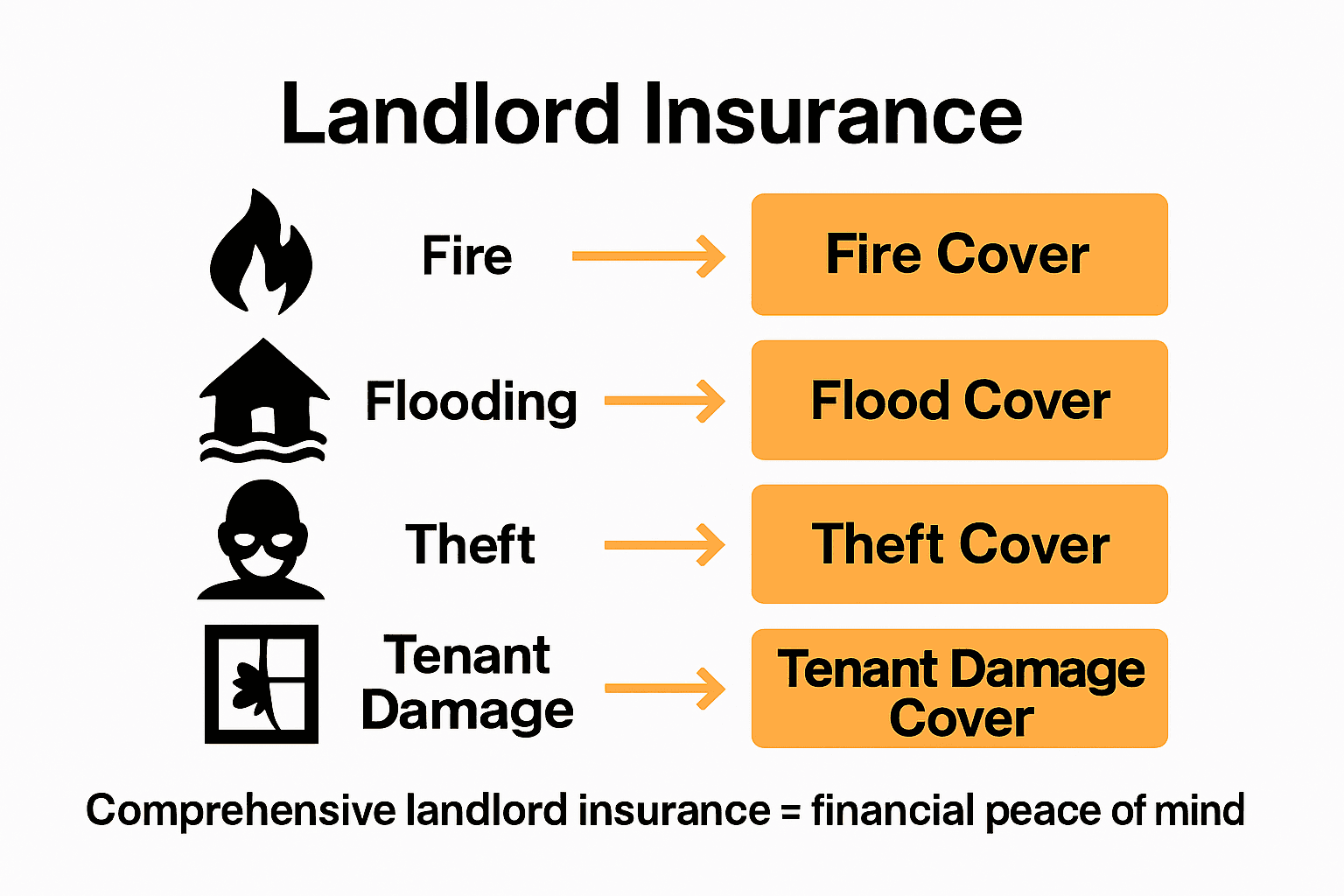
- Fire damage: Often the most costly insurance claim
- Malicious property damage by tenants
- Break-ins and theft
- Water damage and flooding
- Unexpected structural failures
Understanding how insurance mitigates rental risk reveals critical insights into potential financial exposure. Research indicates landlords frequently make costly mistakes such as underinsuring their property, overlooking critical policy exclusions, and neglecting optional coverage extensions that could provide crucial protection.
Prudent risk management requires a proactive approach. Landlords must carefully review policy details, understand comprehensive coverage options, and regularly reassess their insurance needs. The financial consequences of inadequate coverage can be devastating – a single uninsured incident could potentially wipe out years of rental income and personal savings, making thorough insurance protection not just a recommendation, but a financial necessity.
Secure Your Rental Income with Expert Landlord Liability Insurance
Navigating the risks of being a landlord can feel overwhelming, especially when faced with potential tenant non-payment, property damage, or costly legal claims. The article highlights the importance of landlord liability insurance as a vital safeguard that protects your rental income and limits financial exposure from unexpected events. Understanding terms like rent guarantee insurance and legal expenses coverage can empower you to build a strong defence for your investment.
Protect Your Rental Income Today with tailored solutions designed to cover tenant defaults, early lease termination, and property damages. Our comprehensive plans offer peace of mind so you can focus on growing your rental business without fearing sudden losses.

Don’t wait until it’s too late. Explore how our Rental Income Protection can help you confidently manage risks highlighted in the guide. Visit Rental Income Insurance now and secure the financial future of your rental property with the coverage you need.
Frequently Asked Questions
What is landlord liability insurance?
Landlord liability insurance is a specialized protection that safeguards property owners from financial risks associated with rental properties, covering legal fees and settlements for injuries or damages that occur on the property.
What does landlord liability insurance typically cover?
It generally covers bodily injury claims, property damage caused by tenant negligence, legal defense costs, and medical expenses for injured parties. Some policies also include loss of rental income and equipment breakdown coverage.
How does rent guarantee insurance work?
Rent guarantee insurance protects landlords from lost rental income due to tenant non-payment. It often includes legal assistance for recovering unpaid rent or managing evictions, providing extra financial security for property owners.
What are common mistakes landlords make regarding their insurance coverage?
Common mistakes include underinsuring their property, overlooking critical policy exclusions, and neglecting optional coverage extensions. These errors can lead to significant financial exposure in the event of an uninsured incident.
Recommended
- 8 Insurance Terms Every Landlord Should Know – Rental Income Insurance
- Understanding Landlord Insurance Jargon Explained – Rental Income Insurance
- Understanding the Role of Insurance for Landlords – Rental Income Insurance
- 7 Types of Tenant Risk Coverage Every Landlord Should Know – Rental Income Insurance